Top 5 Industrial Applications of Signal Isolators

Introduction
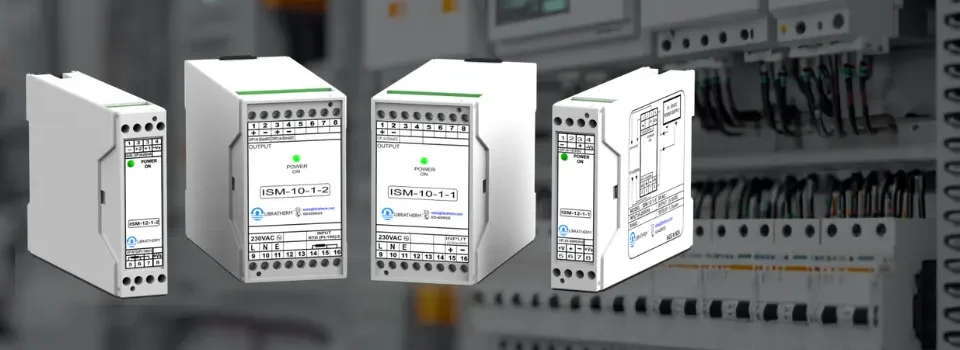
A signal isolator provides galvanic isolation between input and output circuits, eliminating interference, undesired current, and voltage feedback. This isolation preserves the integrity of sensitive instrumentation and maintains dependable signal transmission within automation systems.
They provide compatibility with PLCs, DCSs, and process instruments by supporting a broad range of input and output signals. Reliable conversion between measures is ensured by accuracy, typically within ±0.1%. The majority of industrial isolators are easily integrated into control panels and automation systems because they operate on a stable 24 V DC supply.
Why Signal Isolation Is Essential in Industrial Automation
In industrial environments, electrical noise, ground potential differences, and unpredictable interference are common due to heavy machinery, motors, VFDs, heaters, and long cable runs. These conditions can distort measurement signals coming from sensors and field instruments.
Signal isolation establishes a protective and stabilising interface between field instrumentation and automation systems such as PLCs, DCS, and SCADA, thereby minimising susceptibility to disturbances.
Top 5 Industrial Applications
Steel and Metal Processing Plants

Steel mills and foundries face extreme electrical and thermal conditions. Processes such as furnace control, molten metal temperature measurement, induction heating, rolling mill automation, and load cell-based weighing systems depend on stable, interference-free signals.
High-current busbars, induction heaters, and strong magnetic fields can disrupt analogue signals, leading to drift and unstable readings.
Signal isolators maintain measurement loop integrity by providing galvanic isolation, thereby preventing noise-induced errors and ensuring that PLCs and controllers receive accurate analogue feedback. This results in precise furnace temperature regulation, optimised metal processing quality, and reliable control of rolling mill speed and thickness.
Chemical & Petrochemical Processing

Chemical plants use reactors, mixing vessels, heat exchangers, distillation columns, and dosing skids. All require precise real-time measurement. Hazardous materials, corrosive vapours, static charges, and long cable runs often cause electrical interference in electrical loops.
Signal isolators maintain isolation of analogue outputs from process transmitters, suppress electrical noise, and eliminate ground loops, thereby ensuring reliable PLC data acquisition. This stabilises batch processes, mitigates unsafe operational scenarios, and enforces plant-wide compliance with quality and safety standards.
Boilers, Burners, and Furnace Control Systems

To maintain appropriate firing and thermal efficiency, industrial boilers and combustion systems depend on precise temperature, pressure, and flame-monitoring signals. However, high-voltage spark circuits, blowers, solenoid valves, and ignition transformers generate significant electrical noise that can interfere with the control signal. By removing this interference and disrupting ground loops, signal isolators stop false trips, erratic readings, and communication errors. This promotes safe combustion, helps maintain the proper fuel-to-air ratio, and guarantees steady furnace operation free from annoying shutdowns.
Water & Wastewater Treatment Plants

Instrument signals frequently traverse long distances between systems such as reservoirs, clarifiers, filtration units, and dosing stations in water and wastewater treatment facilities. They are extremely vulnerable to electromagnetic interference (EMI), ground loops, and noise from devices such as pumps and VFDs due to these long cable runs. Inaccurate readings of crucial parameters, including level, flow, pH, and turbidity, can result from such disruptions, affecting chemical dosing and process efficiency. By providing electrical isolation and ensuring steady, precise signal transmission, signal isolators help resolve these problems. This facilitates improved monitoring, control, and compliance as well as dependable integration with SCADA systems.
Pharmaceutical & Food Processing Facilities

In pharmaceutical and food processing facilities, precise control of parameters such as temperature, humidity, and batch data is essential for product quality and regulatory compliance. Production discrepancies can result from even small signal changes caused by electrical noise and interference. To remove these aberrations and ensure precise, reliable data transmission, signal isolators provide galvanic isolation. In procedures such as CIP and SIP, where precise control is essential for sterilisation and hygiene, this is particularly crucial. Isolators promote dependable monitoring, consistent product quality, and adherence to industry standards by preserving signal integrity.
Additional Industrial Areas Where Isolators Are Used
- Power plants (boiler & turbine monitoring)
- Oil & Gas pipelines (pressure & flow metering)
- Cement & Glass furnaces
- Material handling & conveyor automation
Advantages of Using Industrial Signal Isolators
- Eliminates noise and interference, ensuring clear and accurate signals for improved system performance.
- Breaks ground loops, protecting sensitive equipment and improving overall signal integrity.
- Protects PLC/DCS input cards from electrical faults, reducing the risk of equipment damage and costly repairs.
- Enhances measurement stability and repeatability, increasing overall process accuracy and consistency.
- Enables safe signal splitting across multiple control systems, enabling efficient data sharing and greater system flexibility.
- Reduces breakdowns, downtime, and maintenance time by enhancing equipment reliability and operational efficiency.
How Libratherm Supports Industrial Applications
Libratherm offers a comprehensive range of signal isolators for handling a variety of industrial inputs, including voltage, current, RTD, thermocouple, and load cell signals. Built with high isolation levels, these devices ensure safety and reliable performance in demanding environments. They are available in standard DIN-rail mounting and customised OEM configurations to suit specific application needs. For modern automation systems, optional RS-485/Modbus outputs enable seamless digital integration with PLCs and SCADA platforms. With proven performance across industries such as steel, chemical processing, furnaces, and water treatment, Libratherm’s solutions are engineered for durability and precision.
Conclusion
Signal isolators ensure measurement reliability in industrial processes by protecting systems from noise, interference, and electrical faults. They enable safe, accurate, stable signal transmission and maintain efficient control system performance. As industries move toward greater automation, signal isolators are key to maintaining consistent production quality and operational excellence.